My last apartment had the overflow drain hole but it wasn't attached to anything. The water just went directly into the wooden cabinet underneath. Madness. Literally worse than not having the hole because it reduced the capacity of the sink. This is what happens when landlords who DGAF hire handymen who DGAF to do all the work on their units.
To be fair to the potential handyman or contractor many overflow drains are integrated into the sink drain before they attach anything. It might have been the landlord buying temu style sinks with fake overflow holes.
Many overflow drains are not or are poorly connected. If you buy a new home, the inspector will usually skip to overflow test because it will likely fail.
I live in Raleigh, NC and it’s a going joke the amount of travelers or newcomers who refer to the area as RDU (the Raleigh/Durham airport code). I guess it’s a common problem elsewhere.
Again, the Volt already blazed this trail since 2011. The engine automatically comes on at least once every 6 weeks, and overall ensures that a single tank of gas doesn’t stay for more than ~6 months IIRC. I’ve never heard of any fuel-related engine problems on Volts.
That’s a bit of a stretch… most of the announced EREVs are using pretty conventional 4 or even 6-cylinder engines (like the 3.6L Pentastar V6 in the upcoming Jeep Wagoneer REEV). Even though it isn’t connected to the wheels, the engine is capable of keeping the car charged and running normally once the battery runs out. AFAIK, the intention is to be able to drive for hundreds of miles on the engine, not just limp along a dozen or so miles to get to a charger.
I went and checked out the section of the video where he talks about XFinityWifi networks [1]. Literally nothing was tested, he just said “there are reports of devices (not TVs, just “devices”) connecting to XFinityWifi open networks… so even just not letting TVs connect to your WiFI won’t keep you safe!” That’s it!? Why not actually test it!?
Are you confused between TVs selling your viewing habits using automated content recognition (which they all do and is well documented), vs TVs finding nefarious ways to still upload that data even after disabling network access? Because the latter is conspiracy theories and there's no evidence of it happening (and it would be trivial to verify if it was).
It just says it stores it to upload later if/when its connected, not that it uses a 5G connection or connects to random open Wifi networks to upload it even if you never connected it to your own network. Did you read it?
What exactly is the problem with UniFi? I’ve always thought Ubiquiti gear is generally pretty good. At least a better option than e.g. Cisco for the home/small business customer.
I hear this a lot “TVs will just connect to a nearby unprotected WiFi network!” But I ve never seen any evidence of it. It appears to just be speculation, unless you have an actual source?
If TV manufacturers wanted to be underhanded then they could actually make this much harder to detect by delaying the connection to new unauthenticated networks for e.g. months or only after seeing another device connect and then using that device's MAC when it is not around.
They could (although I’m not sure of the 80Kbps that Amazon sidewalk allows is really sufficient for the purpose of uploading ACR data), but is there any evidence that any TV manufacturer actually is? The reality is, why would they bother? 95% percent of people that buy a “Smart TV” hook it right up to their WiFi as soon as they take it out of the box.
ACR isn't generally a lossless 4K snap shot but indexed 32x32 pixel blocks from arbitrary locations on screen. In some cases it's even a fuzzy hash of the content source, and while 80Kbps isn't a lot, you can still push out data in a timely manner.
Because they don't. It's too much guesswork, and honestly pretty complicated. From the user perspective the TV would appear to go offline every now and then, so also somewhat easily detected.
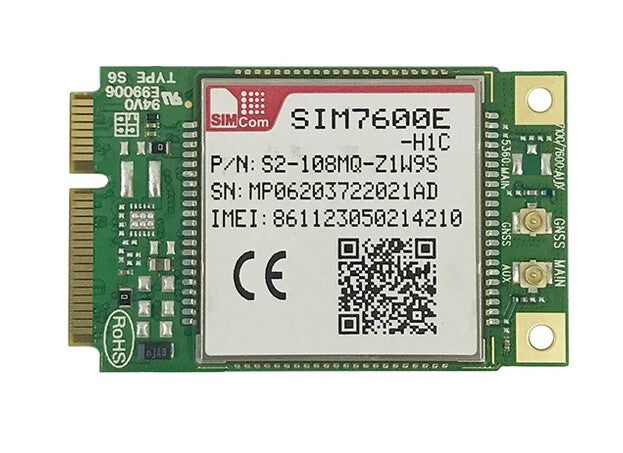
It's much easier to just throw a $10 5G modem in there, pay the $2/year subscription fee for service, and extract data that way. Assuming a 5-10 year relevant lifespan of the TV, they'd throw $20-$30 on top of the sales price for the modem and 10 years of service.
The 5G modem could run completely independent of the wifi network, be a completely different circuit, and you'd never know it was there.
Cars having 5G connectivity is something that consumers actually want, it’s well documented on the spec sheets and marketing material, and obviously in a car WiFi is not going to work in most places. None of those things apply to TVs.
The linked image shows a module meant for easy integration, but it could also simply be a part of the main board of the TV. They could "hide" the GSM antenna alongside the wifi antenna.
If you think its already the case, how come nobody can provide any evidence of it? As stated above, it’s trivial to test. Surely if Brand X was doing this, there’d already be blog posts, youtube videos, HN posts, etc. about it?


reply